

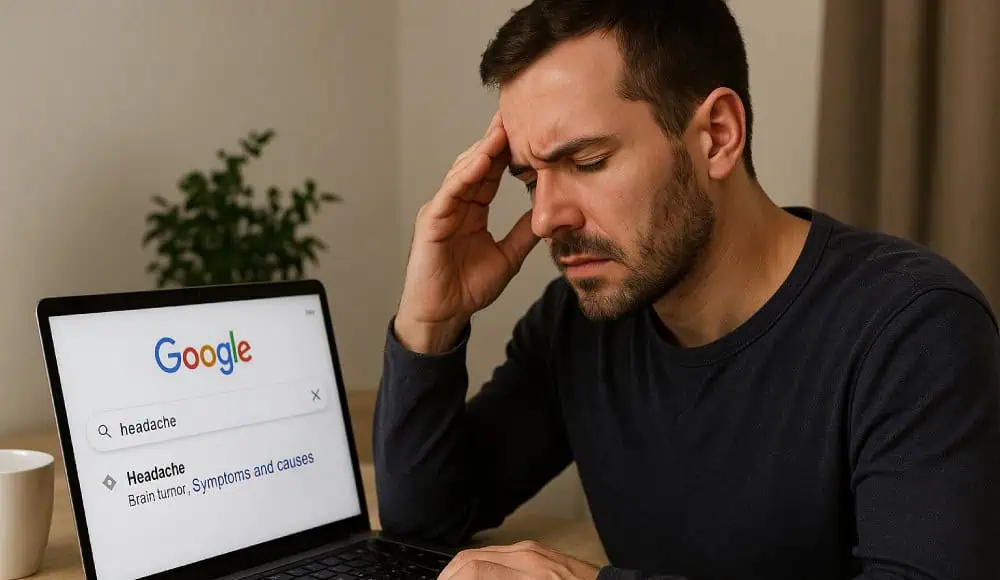
There’s a particular kind of 3am spiral most people will recognise. You notice something feels off, you can’t sleep anyway, and before you’ve properly thought it through, you’re forty-five minutes deep into a medical forum reading about conditions you’d never heard of an hour ago. Sound familiar?
Online symptom-searching has become one of the most common things people do when something feels wrong with their health, and yet it’s one of those habits nobody really talks about openly. There’s a slight embarrassment to it, even though almost everyone does it.
The Gap Between Concern and an Appointment
Part of what drives this behaviour is genuinely practical. Getting a GP appointment in Britain right now isn’t always easy. In plenty of areas, you’re looking at a week or two wait even for something that feels urgent, and that’s if you get through on the phone at all. People fill that gap with information, and the internet is right there, always available, never making you feel like you’re wasting anyone’s time.
There’s also something about the way people feel asking certain questions. Lots of patients, particularly those dealing with chronic pain, mental health, or conditions that can feel stigmatised, find it genuinely difficult to raise certain topics in a ten-minute GP slot. Online research gives them a way to at least understand the vocabulary before they walk in, even if what they read doesn’t always give them the full picture.
Research into this trend, including what Medicann found when looking at why Brits are privately searching for medical information online, suggests it’s not just hypochondria driving the habit. That’s a pretty significant signal about where trust and information-seeking currently stand in UK healthcare.
When Online Research Actually Helps
It’s not all doom-scrolling and catastrophising. There are genuine situations where doing your own research before an appointment is useful. Understanding roughly what a diagnosis means, knowing what questions to ask, or learning about treatment options that exist beyond what you were first offered, those things can make a real difference in how productively you use your time with a clinician.
The NHS itself has decent online resources, and a lot of people do use them sensibly. The problem tends to be what happens after those resources don’t give you the answer you were looking for, and you end up on less reliable sources, or forums where someone’s personal experience is presented as general medical fact.
There’s also been a noticeable rise in people researching areas like medical cannabis, certain private treatments, and off-label uses of prescribed medications. These are topics that don’t always come up readily in standard GP appointments, either because time is tight or because the GP themselves isn’t especially across the latest guidance. People feel they have to do the legwork themselves, and honestly, for some conditions that’s been the only way they’ve found out options even existed.
The Bit Worth Being Careful About
None of this means your search results are a substitute for an actual clinical assessment. The obvious risk with symptom-checking is that online tools and articles can’t account for your full medical history, can’t examine you, and are often written for general audiences in ways that don’t reflect how complex individual cases can be. Reassurance found online isn’t the same as actual reassurance from someone who knows your situation.
What tends to work better is treating your research as preparation rather than diagnosis. Go in with the questions you found online, but let the appointment be the place where those questions get properly answered. It’s a decent middle ground between arriving with no information and arriving convinced you’ve already cracked it.
The broader point is that people searching online for health information aren’t being reckless or irrational. They’re trying to understand what’s happening to them, often in the absence of quick access to professional help. That says something about the system as much as it does about individual behaviour.
