

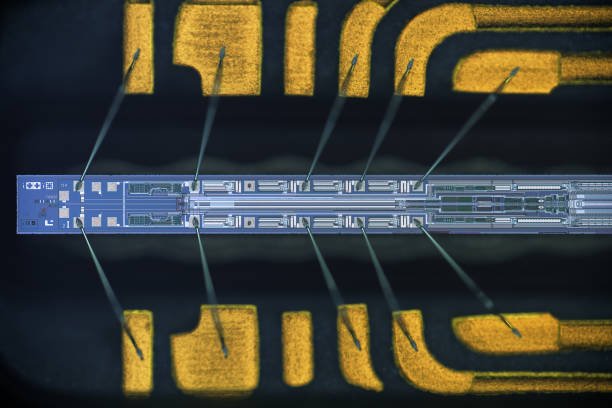
Ultra-HDI PCB design operates at the edge of manufacturing precision, where trace widths shrink below 25 microns and margins for error nearly disappear. At this scale, routing is no longer just a layout task but a tightly controlled engineering discipline that blends physics, materials science, and fabrication constraints into one continuous process. Designers must balance density with manufacturability, ensuring that electrical performance is not compromised under extreme miniaturization.
Within this environment, a PCB layout service becomes more than a support function. It acts as the backbone of reliability, translating complex schematics into production-ready designs while accounting for signal integrity, thermal stability, and fabrication limits. Achieving safe routing below 25 microns demands a structured approach that integrates design rules, simulation, and close collaboration with manufacturing teams.
Understanding Ultra-HDI Design Fundamentals
Ultra-HDI PCBs push beyond conventional HDI by introducing ultra-fine line widths, microvias, and stacked or staggered via architectures. These boards are commonly used in advanced applications such as high-speed computing, semiconductor test platforms, and compact consumer electronics. The challenge lies in maintaining electrical performance while aggressively reducing feature sizes.
Designers must account for tighter tolerances across every layer of the stackup. Even minor variations in dielectric thickness or copper etching can lead to impedance mismatches or signal degradation. Precision is not optional here; it is a requirement that dictates the success of the entire system.
Material Selection and Stackup Precision
Choosing the right substrate materials becomes critical when routing below 25 microns. Low-loss laminates with stable dielectric properties are preferred to ensure signal integrity at high frequencies. Material consistency directly affects etching accuracy and layer alignment, both of which are essential in ultra-HDI designs.
Stackup planning must be executed with absolute clarity. Controlled impedance layers, reference planes, and spacing must be defined early in the design phase. Any ambiguity in stackup specifications can introduce fabrication risks, leading to yield loss or performance inconsistencies.
Design Rule Definition for Sub-25 Micron Routing
Routing at this scale requires highly customized design rules that go beyond standard PCB constraints. Minimum trace width, spacing, and via dimensions must align with the capabilities of advanced fabrication processes such as laser drilling and semi-additive manufacturing.
Rule enforcement tools play a key role in maintaining design integrity. Automated checks ensure that no violations occur during routing, especially in dense regions where manual verification is impractical. These rules must be continuously refined based on feedback from fabrication partners.
Trace Width and Spacing Control
Maintaining consistent trace width below 25 microns is a significant challenge due to etching variability. Designers must include compensation factors to account for copper removal during fabrication. Without these adjustments, traces may fall below acceptable limits, causing open circuits or increased resistance.
Spacing between traces must also be carefully controlled to prevent shorting or crosstalk. Even microscopic deviations can introduce electrical interference, making precise spacing rules essential for reliable performance.
Via Strategy Optimization
Microvias are fundamental to ultra-HDI routing, enabling vertical interconnections in compact designs. However, their placement and stacking must be optimized to avoid reliability issues such as voids or cracking. Proper via design ensures structural integrity across multiple thermal cycles.
Advanced via strategies, including staggered configurations, help distribute stress and improve manufacturability. Designers must evaluate trade-offs between density and reliability when selecting via architectures.
Signal Integrity Challenges in Ultra-HDI
As trace widths decrease, signal integrity becomes increasingly sensitive to design variations. High-speed signals are particularly vulnerable to impedance discontinuities, reflections, and losses. Accurate modeling and simulation are essential to predict and mitigate these effects.
Engineers must consider the interaction between traces, planes, and vias. Electromagnetic coupling can introduce noise, especially in densely packed layouts. Careful routing and shielding techniques help maintain signal clarity across the board.
Manufacturing Constraints and Yield Optimization
Fabrication processes for ultra-HDI PCBs involve advanced techniques such as modified semi-additive processes and laser direct imaging. These methods enable finer features but also introduce new constraints that must be addressed during design.
Yield optimization requires close alignment between design and manufacturing capabilities. Designers must understand process limitations and incorporate tolerances that improve production consistency. Early engagement with fabrication teams reduces the risk of costly redesigns.
Process Capability Alignment
Each fabrication facility has specific capabilities and limitations. Designers must tailor their layouts to match these parameters, ensuring that all features can be reliably produced. Ignoring process capabilities can lead to design failures or low yields.
Collaboration between design and manufacturing teams ensures that constraints are clearly communicated and addressed. This alignment is essential for achieving consistent results in ultra-HDI projects.
Defect Mitigation Techniques
Defects such as opens, shorts, and voids become more prevalent at smaller scales. Proactive design strategies, including redundant routing and robust design rules, help mitigate these risks. Early detection through simulation and validation reduces the likelihood of defects reaching production.
Quality assurance processes must be integrated throughout the design cycle. Continuous verification ensures that potential issues are identified and resolved before fabrication begins.
Integrating Advanced Design Services for Ultra-HDI
Achieving success in ultra-HDI routing often requires specialized expertise and tools. Advanced PCB designing services provide access to experienced engineers, simulation platforms, and design methodologies tailored for high-density applications. These services help bridge the gap between concept and manufacturable design.
Integration of design, simulation, and validation ensures a streamlined workflow. By leveraging specialized services, companies can accelerate development while maintaining high standards of quality and reliability.
Final Thoughts
Routing traces below 25 microns represents a significant leap in PCB design complexity, demanding precision, discipline, and collaboration at every stage. From material selection to signal integrity and manufacturing alignment, each decision carries weight and directly impacts performance and yield.
When precision drops below 25 microns, engineering decisions are no longer forgiving, and every detail begins to matter. In this space, Tessolve brings a structured approach to the challenge, combining hardware design expertise with a deep understanding of advanced PCB technologies. With capabilities spanning design, validation, and manufacturing support, the company positions itself as a reliable partner for organizations navigating ultra-HDI requirements. Their work in semiconductor engineering in USA further strengthens their ability to deliver solutions that meet global standards while addressing highly specialized engineering needs.
