

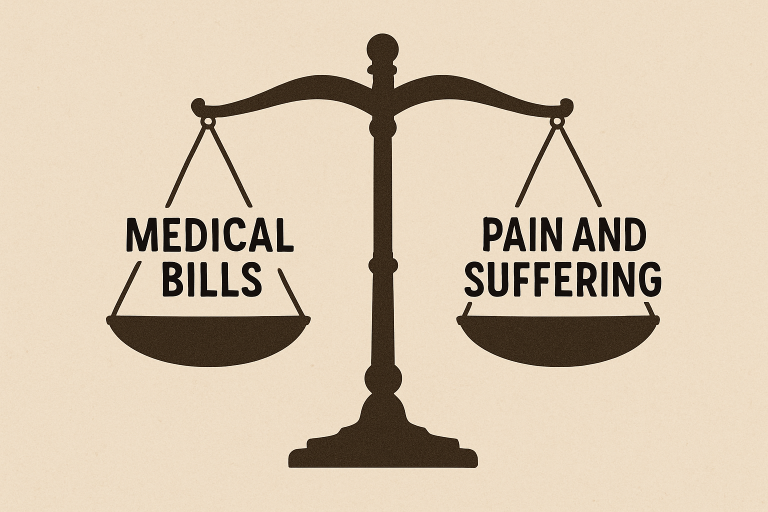
Suffering an injury in an accident can turn everyday life upside down, leaving lasting effects that go far beyond hospital bills or lost income. In Las Vegas personal injury cases, the concept of “pain and suffering” exists to acknowledge the very real physical discomfort, emotional distress, and reduced quality of life that often follow an accident. These losses are deeply personal and cannot be measured with simple receipts, making them some of the most complex—and most important—elements of a personal injury claim. Understanding how pain and suffering damages work, and how they are evaluated under Nevada law, is essential for anyone seeking fair compensation for the full impact of their injuries.
Understanding Pain and Suffering in Personal Injury Claims
When you’re injured in an accident in Las Vegas, the aftermath involves more than just medical bills or property damage. “Pain and suffering” encompasses not only the physical pain but also the emotional distress resulting from your injuries. Unlike straightforward economic losses, assigning a dollar value to pain and suffering is a nuanced process that requires a deep understanding of both the nature of the injuries and their impact on one’s everyday life. Experienced attorneys at BlakeFriedmanLaw can help navigate the complexities of these claims to maximize your compensation.
Pain and suffering damages are classified as non-economic damages. This means they are designed to compensate victims for experiences that do not have a direct monetary cost, such as lasting pain, emotional trauma, and diminished enjoyment of life. Because these impacts are deeply personal and subjective, insurance companies, courts, and juries use various methods to ensure a fair result that reflects the reality of the victim’s experience.
Determining what qualifies as compensable pain and suffering involves carefully documenting both physical and psychological effects. The law broadly recognizes physical pain, emotional distress (including anxiety and depression), and disruption to one’s ability to enjoy daily activities or relationships as elements that should be compensated with non-economic damages.
Victims often struggle to translate their pain into a quantifiable sum, and the insurance company’s calculations are rarely straightforward. To support their case, many seek legal guidance to ensure that every consequence of their injury is properly placed into context during settlement negotiations or at trial.
Standard Methods for Calculating Pain and Suffering
Two primary methods are used in Las Vegas personal injury cases to estimate non-economic damages. While no two cases are identical, understanding these calculation techniques can help you form realistic expectations.
1. The Multiplier Method
The multiplier method is the most prevalent approach for calculating pain and suffering. This technique involves adding up all quantifiable economic damages—think medical bills, lost wages, and out-of-pocket costs—and multiplying them by a number that reflects the seriousness and lasting impact of your injuries. This multiplier typically ranges from 1.5 (for mild injuries) up to 5 or beyond (for severe, life-altering damage).
- Severity and permanence of the injury
- Impact on daily activities and loss of quality of life
- Duration of treatment and recovery
- Documented emotional and psychological suffering
Nevada law does not specify an exact formula; instead, the final figure can be influenced by multiple case-specific factors. This flexibility is designed to ensure victims are not bound to inadequate or arbitrary limits, but it does place a premium on robust documentation and persuasive legal arguments.
2. The Per Diem Method
Under the per diem approach, a daily value is assigned to the suffering, which is then multiplied by the number of days the victim is expected to be affected. For instance, if $200 per day is determined reasonable and the recovery period spans 120 days, the pain and suffering award would amount to $24,000. The daily rate reflects the intensity of pain and life disruption—an amount that could be based on missed work or personal testimony about day-to-day hardships.
Courts may leverage this method if injuries are acute yet temporary, or when the duration of suffering is easily documented. The key to successful per diem arguments is presenting credible and detailed daily notes, medical records, and supporting statements from anyone who observed the impact of the injuries over time. Both the fairness and reasonableness of the assigned daily value must be well supported with evidence.
Factors Influencing Pain and Suffering Awards
- Severity of the Injury: Catastrophic injuries—such as traumatic brain damage or spinal cord injuries—generally warrant higher compensation than soft tissue injuries or minor fractures.
- Duration of Recovery: The longer the recovery or the more ongoing the pain, the greater the award tends to be.
- Impact on Daily Life: Documented disruptions to hobbies, career, family involvement, or routine activities can result in increased compensation.
- Emotional Distress: Anxiety, sleep disturbances, depression, and other emotional impacts are considered and should be documented through therapy notes, personal statements, or testimony from friends and family.
The court or insurance adjuster will evaluate these variables in conjunction with the evidence to ensure that the non-economic damages award is justifiably supported.
Documenting Pain and Suffering
Thorough documentation is crucial when seeking compensation for pain and suffering. Comprehensive records serve as critical proof and include:
- Medical reports detailing diagnosis, treatments, and prescribed medication
- Personal journals or pain logs that track daily symptoms, feelings, and the effect of the injury on routine life
- Statements from family members, co-workers, or qualified mental health professionals familiar with the impact of your injuries
Proper documentation lends weight and credibility to your claim, significantly influencing the amount you may be awarded. Failing to keep detailed records can undermine even the most severe claims—and may weaken your negotiating position with insurers.
Legal Considerations in Nevada
Nevada has a notably victim-friendly approach to pain and suffering damages in general personal injury cases, imposing no limits on the amount a jury can award, except in medical malpractice cases, where non-economic damages are capped at $350,000. Understanding this distinction is crucial for setting realistic expectations, particularly when your claim involves a healthcare provider.
State law also allows juries to consider a wide range of evidence. It does not require adherence to rigid formulas, which may result in more personalized—and potentially higher—awards for plaintiffs with well-documented cases.
Conclusion
Calculating pain and suffering damages in Las Vegas is both an art and a science, relying on well-established legal concepts as well as the ability to document and communicate the extent of your injuries meticulously. By understanding proven calculation methods, documenting every aspect of your physical and emotional recovery, and leveraging Nevada’s relatively flexible standards, you can build a compelling case for full and fair compensation after an injury.
